NOW THAT WE HAVE ALL OUR DECORATING DONE, WE NEED TO FILL OUR HOME WITH THE AROMAS OF AUTUMN PERMEATING THROUGH OUR KITCHENS. HERE ARE SOME LOVELY RECIPES TO ADD TO YOUR MABON MENU IN THE HOPES OF CREATING A WONDEROUS SETTING AND MOOD FOR THIS YEAR'S WITCHES THANKSGIVING~APPLE HARVEST MUFFINSWAKE-UP TO SOME DELIGHTFUL APPLE MUFFINS TO HAVE WITH YOUR COFFEE OR TEA * 3 EGGS * 1/2 CUP SUGAR * 1/2 CUP VEGETABLE OIL * 1/2 TSP VANILLA * 1 CUP GRATED APPLES * 1 CUP GRATED CARROTS * 1 CUP WHOLE-WHEAT FLOUR * 1 CUP ALL-PURPOSE FLOUR * 1 TBS. BAKING POWDER * 1/4 TSP. SALT * 1/2 TSP. CINNAMON * 1/2 TSP NUTMEG PREHEAT THE OVEN TO 375 DEGREES. LIGHTLY GREASE A 12-MUFFIN TIN OR LINE IT WITH PAPER LINERS. SET ASIDE. IN THE BOWL OF AN ELECTRIC MIXER, BLEND THE EGGS, SUGAR, VANILLA AND OIL UNTIL WELL COMBINED. STIR IN THE GRATED APPLES AND CARROTS. IN A SEPARATE BOWL, SIFT THE FLOURS, BAKING POWDER, SALT, NUTMEG AND CINNAMON. BLEND THE DRY INGREDIENTS WITH THE APPLE MIXTURE UNTIL JUST COMBINED. SPOON THE BATTER INTO THE MUFFIN TINS AND BAKE FOR 25 MINUTES. MAKES 12 MUFFINS. COVENSTEAD BREAD(RECIPE BY GERINA DUNWICH) * 3/4 CUP WATER * 1/2 CUP HONEY * 1/2 CUP FINELY CHOPPED CITRON * 1/2 CUP SUGAR * 2 TABLESPOONS ANISE SEEDS * 2-1/3 CUPS FLOUR * 1-1/2 TEASPOONS BAKING SODA * 1 TEASPOON NUTMEG * 1 TEASPOON CINNAMON * 1/4 TEASPOON ALLSPICEBRING THE WATER TO A BOIL IN A SAUCEPAN. ADD HONEY, CITRON, SUGAR, AND ANISE SEEDS. STIR UNTIL THE SUGAR COMPLETELY DISSOLVES AND THEN REMOVE FROM HEAT.SIFT TOGETHER FLOUR, BAKING SODA, SALT, AND SPICES, AND FOLD INTO THE HOT HONEY MIXTURE. TURN THE BATTER INTO A WELL-GREASED 9 X 5 X 3-INCH LOAF PAN AND BAKE IN A PREHEATED 350-DEGREE OVEN FOR ONE HOUR. TURN OUT ON A WIRE RACK TO COOL. (THIS RECIPE YIELDS ONE LOAF OF BREAD.)COVENSTEAD BREAD IMPROVES IF ALLOWED TO STAND FOR A DAY, AND IT IS AN IDEAL BREAD TO SERVE DURING LAMMAS AND AUTUMN EQUINOX SABBATS AS WELL AS AT ALL COVEN MEETINGS.(THIS "COVENSTEAD BREAD" RECIPE IS FROM "THE WICCA SPELLBOOK: A WITCH'S COLLECTION OF WICCAN SPELLS, POTIONS AND RECIPES" BY GERINA DUNWICH, P. 169, A CITADEL PRESS BOOK, CAROL PUBLISHING GROUP, 1994)HARVEST POT ROAST (RECIPE FROM MY OWN RECIPE BOX) * 4-5LB POT ROAST * 1 STICK BUTTER * 1 LARGE ONION SLICED * 3 CELERY STALKS, CHOPPED * 1 GARLIC CLOVE, CHOPPED * 1/4 TSP. DRIED THYME * 1/4 TSP. DRIED PARSLEY * 1 BAY LEAF * 1/8 TSP. BLACK PEPPER * 1/4 TSP. SALT * 2-10OZ CANS FRENCH ONION SOUP (OR YOU CAN BE ADVENTUROUS AND MAKE YOUR OWN FROM SCRATCH) * 4 LARGE RED POTATOES, QUARTERED * 1-8OZ PACKAGE RAW BABY CARROTS (OR HOME GROWN IF LUCKY) * 1-16OZ PKG. FROZEN BROCCOLI/CAULIFLOWER MIX (OR IF YOU'RE LUCKY USE VEGGIES FROM YOUR GARDEN THIS YEAR) IN DUTCH OVEN OR OVEN SAFE POT W/LID BROWN BOTH SIDE OF THE ROAST, USING HALF THE BUTTER. SET THE ROAST ASIDE. WITH REMAINING BUTTER, SAUTE' THE ONION, GARLIC, AND CELERY UNTIL ONIONS ARE TENDER AND BEGINNING TO BROWN. ADD THE THE THYME, PARSLEY, BAY LEAF, AND PEPPER. MIX WELL AND THEN RETURN THE POT ROAST TO THE PAN. SPRINKLE SALT OVER THE ROAST AND ADD THE FRENCH ONION SOUP. COOK AT 325 DEGREES FOR 4 HOURS. BASTE MEAT AS NEEDED. ADD POTATOES AND CARROTS AND SALT TO TASTE. COOK FOR ANOTHER 45 MINUTES. ADD BROCCOLI/CAULIFLOWER MIX AND COOK FOR 20 MORE MINUTES. SERVE WITH HOT BREAD, OR DINNER ROLLS.MAKES 8 SERVINGSBALSAMIC VINEGAR-GARLIC POTATOES WITH GREENS * 2 POUNDS RED-SKINNED POTATOES, SLICED * 6 LARGE CLOVES GARLIC, SLICED LENGTHWISE * 1/3 CUP EXTRA-VIRGIN OLIVE OIL * 3 TABLESPOONS BALSAMIC VINEGAR * SALT * PEPPER * 4 CUPS FRESH GREEN BEANS, RINSED * 2 TABLESPOONS CHIVES, CHOPPEDMIX POTATOES, GARLIC AND OIL IN A 10 X 15" RIMMED PAN. BAKE AT 450 DEGREES UNTIL WELL BROWNED, ABOUT 1 1/4 HOURS. TURN VEGETABLES WITH A WIDE SPATULA EVERY 10-15 MINUTES. POUR VINEGAR INTO PAN, SCRAPING WITH SPATULA TO RELEASE BROWNED BITS AND TO MIX WITH POTATOES. ADD SALT AND PEPPER TO TASTE. POUR POTATOES INTO A WIDE, SHALLOW BOWL. CHOP HALF THE GREAN BEANS (IN HALF OR YOU MAY LEAVE AS IS) AND MIX WITH POTATOES. TUCK REMAINING GREEN BEANS AROUND POTATOES AND SPRINKLE WITH CHIVES.SALEM WITCH PUDDINGRECIPE BY GERINA DUNWICH * 4 EGGS, SEPARATED * 1-1/2 CUPS PUMPKIN PUREE * 1 CUP LIGHT BROWN SUGAR * 3/4 CUP HALF-AND-HALF * 5 TABLESPOONS RUM * 1/2 TEASPOON GROUND CLOVES * 1/2 TEASPOON GROUND GINGER * 1/2 TEASPOON GROUND NUTMEG * 1/4 TEASPOON SALTIN AN ELECTRIC MIXER OR LARGE MIXING BOWL, BEAT THE EGG WHITES UNTIL STIFF. IN A DIFFERENT BOWL, BEAT THE EGG YOLKS UNTIL THICK AND LEMON-COLORED. COMBINE THE YOLKS WITH THE REMAINING EIGHT INGREDIENTS; MIX TOGETHER WELL; AND THEN FOLD IN THE EGG WHITES.POUR THE PUMPKIN MIXTURE INTO A BUTTERED 1-QUART SOUFFLE DISH. PLACE IT IN A PAN OF HOT WATER AND BAKE IN A 350-DEGREE PREHEATED OVEN FOR ABOUT 45 MINUTES. (THIS RECIPE YIELDS 6 SERVINGS.)(THIS "SALEM WITCH PUDDING" RECIPE IS FROM "THE WICCA SPELLBOOK: A WITCH'S COLLECTION OF WICCAN SPELLS, POTIONS AND RECIPES" BY GERINA DUNWICH, P. 173, A CITADEL PRESS BOOK, CAROL PUBLISHING GROUP, 1994)
Origin: paganism-new-age.blogspot.com
JANUARY 1 READING: Saint Basil the Great was born about the end of the year 329 in Caesarea of Cappadocia, to a family renowned for their learning and holiness. His parents' names were Basil and Emily. His mother Emily (commemorated July 19) and his grandmother Macrina (Jan. 14) are Saints of the Church, together with all his brothers and sisters: Macrina, his elder sister (July 19), Gregory of Nyssa (Jan. to), Peter of Sebastia (Jan. 9), and Naucratius. Basil studied in Constantnople under the sophist Libanius, then in Athens, where also he formed a friendship with the young Gregory, a fellow Cappadocian, later called "the Theologian." Through the good influence of his sister Macrina (see July 19), he chose to embrace the ascetical life, abandoning his worldly career. He visited the monks in Egypt, in Palestine, in Syria, and in Mesopotamia, and upon returning to Caesarea, he departed to a hermitage on the Iris River in Pontus, not far from Annesi, where his mother and his sister Macrina were already treading the path of the ascetical life; here he also wrote his ascetical homilies.About the year 370, when the bishop of his country reposed, he was elected to succeed to his throne and was entrusted with the Church of Christ, which he tended for eight years, living in voluntary poverty and strict asceticism, having no other care than to defend holy Orthodoxy as a worthy successor of the Apostles. The Emperor Valens, and Modestus, the Eparch of the East, who were of one mind with the Arians, tried with threats of exile and of torments to bend the Saint to their own confession, because he was the bastion of Orthodoxy in all Cappadocia, and preserved it from heresy when Arianism was at its strongest. But he set all their malice at nought, and in his willingness to give himself up to every suffering for the sake of the Faith, showed himself to be a martyr by volition. Modestus, amazed at Basil's fearlessness in his presence, said that no one had ever so spoken to him. "Perhaps," answered the Saint, "you have never met a bishop before." The Emperor Valens himself was almost won over by Basil's dignity and wisdom. When Valens' son fell gravely sick, he asked Saint Basil to pray for him. The Saint promised that his son would be restated if Valens agreed to have him baptized by the Orthodox; Valens agreed, Basil prayed, and the son was restored. But afterwards the Emperor had him baptized by Arians, and the child died soon after. Later, Valens, persuaded by his counsellors, decided to send the Saint into exile because he would not accept the Arians into communion; but his pen broke when he was signing the edict of banishment. He tried a second time and a third, but the same thing happened, so that the Emperor was filled with dread, and tore up the document, and Basil was not banished. The truly great Basil, spent with extreme ascetical practices and continual labours, at the helm of the church, departed to the Lord on the 1st of January, in 379. at the age of forty-nine.His writings are replete with wisdom and erudition, and rich are these gifts he set forth the doctrines concerning the mysteries both of the creation (see his Hexaemeron) and of the Holy Trinity (see On the Holy Spirit). Because of the majesty and keenness of his eloquence, he is honoured as "the revealer of heavenly things" and "the Great."Saint Basil is also celebrated on January 30th with Saint Gregory the Theologian and Saint John Chrysostom.Rest from labour.APOLYTIKION IN THE FIRST TONE Your voice resounded throughout the world that received your word by which, in godly manner, you taught dogma, clarified the nature of beings, and set in order the character of people. Venerable father, Royal Priesthood, intercede to Christ God to grant us great mercy.KONTAKION IN THE FOURTH TONE For the Church art thou in truth a firm foundation, granting an inviolate lordship unto all mortal men and sealing it with what thou hast taught, O righteous Basil, revealer of heavenly things.SOURCE:"SAINT OR FEAST POSTED THIS DATE 2011(with 2010's link here also and further, 2009, 2008's, even 2007!)"
In many traditions of Paganism and Wicca, days of the week are very important aspects of effective spellcasting. For example, spells to do with abundance or prosperity could be done on Thursday, because it is associated with riches and desire. When casting a spell concerning business or communication, one might prefer to work on a Wednesday due to its associations.While not all traditions follow this rule, when you're doing any sort of magical working, always be sure to document the day of the week you're performing the spell. You might be surprised later on to see some connections!SundayColor: Yellow And goldPlanet: SunMetal: GoldDeities: Brighid, Helios, RaGemstones: Quartz crystal, diamond, amber, carnelianHerbs And Plants:Marigold, sunflower, cinnamonAssociations: Agriculture, beauty, hope, victory, self-expression and creativityMondayColor: Silver, white, light bluePlanet: MoonMetal: SilverDeities: Thoth, SeleneGemstones: Pearl, opal, moonstoneHerbs And Plants: Wintergreen and other mints, catnip, comfrey, sage, chamomileAssociations: Childbearing and family life, purity and virginity, healing, wisdom, intuitionTuesdayColor: Red and orangePlanet: MarsMetal: IronDeities: Lilith, Mars, Aries, the MorrighanGemstones: Garnets, rubyHerbs And Plants: Thistles, holly, coneflower, cactusAssociations: War and conflict, enemies, initiation, marriage and protectionWednesdayColor: PurplePlanet: MercuryMetal: Mercury (Quicksilver)Deities: Odin, Hermes, Mercury, Athena, LughGemstones: Adventurine, agateHerbs And Plants: Aspen trees, lilies, lavender, fernsAssociations: Business and job-related issues, communication, loss and debt, traveling and journeysThursdayColor: Royal blues, greensPlanet: JupiterMetal: TinDeities: Thor, Zeus, Jupiter, JunoGemstones: Turquoise, amethyst, lapis lazuliHerbs And Plants: Honeysuckle, oak trees, cinquefoilAssociations: Honor and family loyalty, harvests, clothing and riches, fealtyFridayColor: Pink, aqua/blue-greenPlanet: VenusMetal: CopperDeities: Freya, Venus, AphroditeGemstones: Coral, emerald, rose quartzHerbs And Plants: Strawberries, apple blossoms, feverfewAssociations: Family life and fertility, sexuality, harmony, friendship, growthSaturdayColor: Black, dark purplePlanet: SaturnMetal: LeadDeities: Saturn, HecateGemstones: Apache tear, obsidian, hematiteHerbs And Plants: Thyme, mullein, cypressAssociations: Agriculture and creativity, fortune and hope, protection and banishment of negativity
Source: magical-poetry.blogspot.com
From a hotel in Flagstaff, AZ. I have access to the archives of "Touchstone" magazine. After the news from Rome last month, it occcurs to me to provide some background. Therefore, I take you to June 2002 and one of my articles on an even earlier document.
A Neglected Opportunity
Robert Hart on the Criticisms of Dominus Iesus
In the Fall of 2000, the document "Dominus Iesus": On the Unicity and Salvific Universality of Jesus Christ and the Church was put out by the Vatican to make it clear that sound doctrine is not superseded by the passing of time and that eternal verities are not subject to any essential change simply because mankind, including the Church, experiences the increase of knowledge. Among the eternal verities, it included, much to the indignation of some other Christians and the press, the claims of the Roman Catholic Church.
I am an Anglican priest, not a Roman Catholic, and when I first read the news reports, I was sure that the Vatican had gone much too far. I began to exchange words to that effect with my Roman Catholic brother, until I read the declaration for myself. Then I said, in his language, "mea maxima culpa", which in my language means, "by my own most grievous fault." For what I saw in it was simply what the Holy Father intended, as America Press would later report: "The cardinal [Ratzinger], responding to criticism... said it was written because Pope John Paul II 'wanted to offer the world a great and solemn recognition of Jesus Christ as Lord at the culminating moment of the Holy Year.'"
The primary issue in the document is the unchanging universality of the gospel. It boldly defends the mission of the Church, and encourages us with a reminder that that mission remains exactly what the Lord Jesus commanded, that his gospel be presented to all peoples as the revelation of God's salvation for all nations on the earth. At a time when such a defense is sorely needed, "Dominus Iesus" heartily proclaims what all Christians should hold dear, that the gospel is unequaled by anything in the variety of mankind's religious genius.
ESSENTIALS MAINTAINED
With profound sensitivity, both to non-Christian religions and other Christians who are, like myself, not in communion with Rome, the Vatican maintained the essentials of the faith shared by Christians the world over. Appealing to Scripture from beginning to end in a way reminiscent of the patristic method, the Roman see maintained the unique and universal saving revelation of God in Christ, as the full title of the declaration suggests.
This Vatican document spoke of the Church. This it had to do as part of its thorough discussion of salvation, in which discussion the Church must figure as the instrument of God's kingdom on earth. The Church does not merely proclaim redemption, it offers redemption, having in its life the full gift of salvation in Christ, both by his Word and by the sacraments.
The document said nothing new, and following the pattern of" The Catechism of the Catholic Church", maintained the Magisterium's teaching on the Petrine See in a way most sensitive to those who do not agree, but are, nonetheless, baptized into Christ and share the same faith of the Creed and the same Scriptures. It acknowledged their place in Christ and their ministry of spreading his salvation, even if they are "not in perfect communion" with the See of Rome.
Read carefully, it does not "unchurch" baptized and faithful Christians, though it never wavers in its adherence to the belief that the fullness of the Church "subsists in the Catholic Church."
"Fullness" does not mean that the Church subsists exclusively in the Catholic Church, but speaks of the whole deposit of truth and of the gifts of the Holy Spirit that is entrusted to her.
Among these gifts of the Spirit are the sacraments. The truth is the teaching that has been handed down from Christ and his apostles through all of the subsequent ages, and that is guarded by the successor of St. Peter, namely, the bishop of Rome. This was the belief of the Catholic Church long before "Dominus Iesus" was written.
ALLEGED OFFENSE
Faithful to its own beliefs, the Vatican expressed the different degrees of closeness to the Catholic Church held by the other Christian Churches. In so doing, it created the one and only section used as a "pull quote" by the press. The alleged offense was in its description of the Catholic Church and its treatment of the rest of the Christian world as being either "particular Churches" or not Churches at all but "ecclesial communities."
The offending passage began with the claim that "there exists a single Church of Christ, which subsists in the Catholic Church, governed by the Successor of Peter and by the Bishops in communion with him." It then described, in a less controversial passage, "the Churches which, while not existing in perfect communion with the Catholic Church, remain united to her by means of the closest bonds, that is, by apostolic succession and a valid Eucharist."
These it called "true particular Churches" and said that in them "the Church of Christ is present and operative... even though they lack full communion with the Catholic Church, since they do not accept the Catholic doctrine of the Primacy, which, according to the will of God, the Bishop of Rome objectively has and exercises over the entire Church."
"Dominus Iesus" then discussed those "ecclesial communities" that "have not preserved the valid Episcopate and the genuine and integral substance of the Eucharistic mystery." These, it said, "are not Churches in the proper sense; however, those who are baptized in these communities are, by Baptism, incorporated in Christ and thus are in a certain communion, albeit imperfect, with the Church."
These words received all the attention, but it would have been only fair to give equal attention to these words that followed:
Therefore, these separated Churches and communities as such, though we believe they suffer from defects, have by no means been deprived of significance and importance in the mystery of salvation. For the spirit of Christ has not refrained from using them as means of salvation which derive their efficacy from the very fullness of grace and truth entrusted to the Catholic Church.
But such attention was not given by the press.
The hue and cry that followed drowned out the real message of the declaration. In fact, one would think that the whole doctrine of papal primacy had been invented in and for this very document, meant by the Vatican to set back ecumenical progress by a hundred years.
Clearly, throughout "Dominus Iesus", the Roman See has taken care to express a degree of solidarity with all Christians, but not in such a manner as to compromise its own doctrine. But, to be considered "proper" or not "proper" does not carry within it a judgment on the reality of salvation in Christ or the genuine faith of those Churches. It speaks instead of the conviction that, in various degrees, they lack the "fullness" God intended.
Yet, this charitable restatement of Roman doctrine was treated as a shocking bit of incivility. Most astonishing of all was the reaction of the archbishop of Canterbury, Dr. George Carey, who immediately expressed his offense at being told that the Anglican Communion was not a "proper" Church, despite the fact that the Anglicans were never mentioned by name.
Two Ironies
"The idea that Anglican and other churches are not 'proper churches' seems to question the considerable ecumenical gains we have made," said Archbishop Carey. There are two ironies here.
The first is in whom Carey (speaking for many other religious leaders) blamed for the division. Beginning in the latter half of the nineteenth century, a desire to pursue ecumenical relations with Rome was increasingly a priority of the Anglican Communion. Relations continued along a road of significant progress, reaching what would prove to be their summit in the 1960s and early 1970s, during the time of Pope Paul VI and Archbishop Michael Ramsey. But the unity sought for was not to be achieved.
The failure was principally caused by a rebellion against Church Tradition in the 1970s, namely, the decision of Anglican bodies, including the Episcopal Church, to admit women to the priesthood. This spread to other churches of the Anglican Communion until England began to "ordain" women in 1992. This was done with the active support of Dr. Carey, though he knew that the innovation would be the death knell of hopes for unity with the Church of Rome, and with the Orthodox Church as well.
Now there are female Anglican clergy whose ordination never can be seen as sacramentally valid, not only by Rome and Orthodoxy, but by traditional Anglicans as well. What a very unecumenical development indeed, not only breaking off useful discussions with the Catholic and Orthodox churches, but sharply dividing the Anglican Communion itself. It is one of the reasons why I am a priest in the Continuing Anglican movement, separated from the Episcopal Church in which I was raised, and therefore from Canterbury, too.
Add to this the diversity of moral teaching that has come to be associated with the once good Anglican name, against which the archbishop has given no strong defense, and his statement must be turned on himself. It all does great harm to "the considerable ecumenical gains we have made." For the Vatican to restate its long-held doctrine on the Primacy is by no means a significant obstacle to ecumenical progress. And how could it compare to the unfaithfulness the archbishop has supported?
Discussions between Rome and the Anglican Communion have become a mere formality, without real purpose, due to the novelty of women's "ordination" in 1976. Time has seen the situation worsen, and all by acquiescence to the initiative of apostasy in the Anglican Communion, not by Roman intransigence. What, then, is the basis of the English archbishop's complaint?
Various Protestant leaders jumped onto the bandwagon with Dr. Carey, denouncing the bad manners of the pope, and especially of Cardinal Ratzinger. In fact, so have significant leaders within the Roman Catholic Church. What have they all missed? What, in this document, have they ignored? This is where we find the second irony: "Dominus Iesus" is a document that deserves to be seen in exactly the opposite way to the reputation it has been given. It is, in fact, a very ecumenical document.
Two Kinds of Ecumenism
Of course, we must bear in mind the distinction between two kinds of ecumenism. We have become perhaps too used to a sloppy kind, the kind in which anything of substance, about which people may disagree, is simply avoided. Serious thought is extinguished, and the lesson is learned that theology is a bad word, something to be avoided at all costs. Is it any wonder that from such ecumenism as this only laziness, and eventually immorality, can grow?
The other kind of ecumenism is the kind that takes seriously the need to hold dear the truth for which we are willing to die, and for charity's sake to find common ground as Christians. Theology and morals are not allowed to slide into the abyss. Where we can agree, we do so in good conscience, and where we cannot agree, we disagree with charity. Our common purpose is to serve our Lord, and as much as we can honestly do so, to serve him together. And here we find that there is much common ground.
The document "Dominus Iesus" serves, by its main emphasis on "the unicity and salvific universality of Jesus Christ and the Church," this very end. It serves it not only as between different respective Churches and Rome, but also among all Christians in a more general sense. It fits the second model of ecumenism, the mature and responsible kind, by establishing common ground on matters of major importance without the pretense of ignoring essential differences. This is simple honesty.
The body of "Dominus Iesus" is a powerful and eloquent statement of the Christian faith, carefully worded and defended by a consistent appeal to the authority of the Bible. If read fully, it gives all Christians an expression of their common ground, not only with Catholics who obey the see of Peter, but also with each other in the face of a world growing ever more hostile to the very notion of Christianity as a missionary religion.
It gives us a strong word of encouragement to resist the demand-heard as loudly from many church leaders as from the secular world-that we drop our exclusive and universal claim of salvation in Christ, and that we both halt and condemn our own mission to the nations. It presents a needed apologetic at a time when rather vocal church leaders have decided that we have no right to convert people to Christ, and favor political correctness and multiculturalism over faithfulness to Christ and his Great Commission that we make disciples.
By appealing to Scripture, "Dominus Iesus" gives to all Christians, certainly including the Protestant Evangelicals, reason to study its contents for their own edification. It refers to the scriptural teaching as being "without error." Evangelicals and fundamentalists can rejoice over the faith expressed in the truth taught by the Scripture, especially on the essential matters of faith in Christ. The document speaks simply and plainly of the inspiration of Scripture by saying that these books "have God as their author."
On one of my weekly radio broadcasts I read a large portion of the document. Many of the listeners to the station were Evangelicals, quite appreciative of the document's emphasis on the statement of St. Peter: "Neither is there salvation in any other. For there is no other name given under heaven among men by which we must be saved (Acts 4:12)." Apparently the disappointment of the morning for some people was that this powerful affirmation of Bible truth had come from the Vatican.
Also, it is of no small consequence that the document quotes the Nicene/Constantinopolitan Creed without the controversial "filioque". (The "filioque" is the addition of "and the Son" to "proceedeth from the Father" in the article on the Holy Spirit.) It has never been acceptable to the Orthodox Church, and its use in the West has caused contention for centuries. This was a clear gesture of respect and conciliation intended for the Orthodox.
NEGLECTED OPPORTUNITY
"Dominus Iesus" received undeserved bad press. Treating all Christians, and indeed all people, in accord with their inherent dignity-a dignity that requires that one be honest when one thinks others are in error-it has, nonetheless, been characterized as unecumenical, triumphalistic, and insensitive. This is a very great shame. At the very least, it ought to be studied for its profound defense of the gospel and the mission of the Church.
"Dominus Iesus" has been a very neglected opportunity for all Christians to forge stronger ties with each other and to study the meaning of our shared mission to the nations as believers in the same Christ.
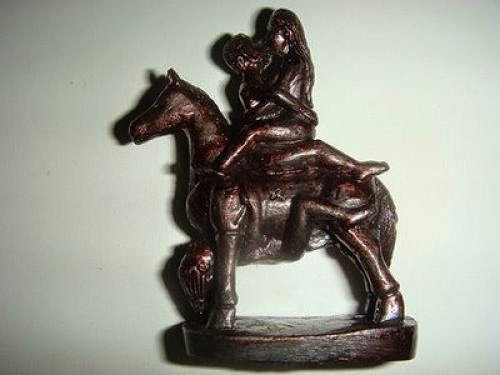
LP Goy has brought magical Arthan to Sakod spirits ceremony and melted into In-Koo MaSepNang figure with Pong Nang Ook Tak that is the sacred Pong in Mahasaney for the opposite sex and the same sex.
This Pong must bless until the beautiful woman happened to find the beloved man as the breast is broken and Fung with Takrut Phaya Te Krua.
LP Goyhas pluked sek as ancient Khmer ritual every step until three months.
Pluk sek until LP Goy saw Nimit {image} of male and female are hugging each other clearly called male In-Koo spirit and female In-Koo spirit penetrating in every lovers of In-Koo MaSepNang.
Besides, LP Goy called Yan In of the male and female into MaSepNang in every pairs and blessed with Mont MaSepNang, Mont In-Koo Pitsavas, Mont Chang Pasom Khlong and Mont Mahasaney Pitsadan 108, Mont Na Long Lai that can make a magic to human mind both male and female to love you.
According to LP Goy, If someone have this, female saw, female loved while the male saw, the male loved.
There are charms for the one who saw with love and kind.
It is dominant in Metta Mahasaney and happy in love, family, prosperity, traveling all the time., this amulet is best for attracting back a lost love or relationship and also for attraction.
Reference: paganism-new-age.blogspot.com
I've long suspected that white supremacy is linked with some of the overt evangelizing of military members by fundamentalist Christian chaplains, so this story by Chris Rodda is no suprise. Mikey Weinstein spoke at CFI-West about two years ago. In the question and answer session, I asked him if MRFF had received any reports of this type of activity. He gave me a rather vague reply, indicating that either he did not know or could not talk about the matter. In continuing to investigate Gordon Klingenschmitt, Chris Rodda ran across his chaplain endorsing agency while he served in the Navy.The other was to post a very strange disclaimer on his website, in which he called Lynn and Weinstein "bone-heads," and defended his right to call himself "Chaplain," stating that he has a current endorsement as a "Chaplain and Evangelist to America" from the Chaplaincy of Full Gospel Churches (CFGC). It was this statement that led MRFF to take a closer look at the CFGC, a chaplain endorsing agency headed by retired Army colonel and chaplain Jim Ammerman, and authorized by the Department of Defense to provide the ecclesiastical endorsement required by the military for all military chaplains, with several hundred of its chaplains currently serving in all branches of the military. Right off the bat, MRFF found the expected stuff -- which alone provides ample reason to demand that the DoD to revoke the chaplain endorsing authority of Jim Ammerman and the CFGC. CFGC should be disqualified as an endorsing agency because of its repeated denigration of all other religions and Christian denominations that aren't Charismatic or Pentecostal, which is completely contrary to Department of Defense Instruction Number 1304.28. The CFGC is the endorser for approximately two hundred chaplains. This endorser openly denigrates other Christians, Jews, Muslims, and the non-religious. The CFGC also advocates crazy conspiracy theories and the armed overthrow of the United States government. There is even a current chaplain, Army Major James F. Linzey, who is a member of something called the Prophecy Club. This website seems to be some sort of money making site, consisting mainly of ads for videos and their magazine.Maj. Linzey has made several videos in the past for the Prophecy Club and Jim Ammerman, his endorser. One video is called "Imminent Military Takeover of the U.S.A." showed by militia groups in the 1990's, and another is a radio interview for a show called The Edge. Maj. Linzey also went into all the conspiracy theory stuff about the "masonic, Illuminati wackos" who have gotten into government office by deception, and the 9-11 conspiracy theory stuff, but it's his statements inciting the taking up of arms against the government that are most disturbing. Linzey first talked about his "friend, Jim Gilcrest, who's heading up the Minuteman Project," promoting the group with statements like this: "I'm trying to avoid saying we need to take up arms and go take care of it ourselves, BUT IT APPEARS THAT WE MIGHT BE NEEDING TO HEAD THIS WAY." He also promoted militias in general because there will be "blood bath" when the "invasion from the south" and battle with foreign U.N. forces and the Chinese in the U.S. commences. "I SUGGEST THAT AMERICANS GET THEIR ARMS TO BE READY TO DEFEND THEMSELVES AND THEIR OWN HOMES WHEN THEY COME KNOCKING ON YOUR DOOR, DEMANDING YOUR FOOD, DEMANDING YOUR MONEY, AND RAPING YOUR WIVES. The U.N. troops will be here to start patrolling the cities, the streets, the highways, and we will be under, basically, European rule." Among his other fear-mongering claims are that there are detention camps already set up by the U.S. government for "patriots" who won't go along with the government's agenda, that these detention camps are equipped with facilities to kill the detainees by gassing the "patriots," and that the government already has a list of the "patriots." This radio show is also one where Maj. Linzey directly stated that his military chaplain endorser Jim Ammerman knows exactly what he's out there doing. When the interviewer asked Linzey: "If what you are saying is true, wouldn't the government -- if the government is any way culpable to some of these events -- wouldn't they want to not have you, say go on a speaking tour or anywhere else, or even be on this show? Linzey responded: "Would they not want me to? Well, you know, probably not. Now -- but that doesn't matter. As long as I'm abiding within the law, I can say that I'm speaking as Jim Linzey, not in my official capacity as an officer or military chaplain, then I prefaced it right, and I can proceed. And Col. Jim Ammerman -- he's my endorser -- and he knows exactly what I'm doing, and, so, that's it." But, of course, Jim Ammerman would approve of what Maj. Linzey is spewing. Ammerman's own "Imminent Military Takeover of the U.S.A." video contains the same kind of seditious incitement, which, no doubt, accounts for its popularity among militia groups.The Chaplaincy of Full Gospel Churches should be removed as an endorser for the United Stated military forces. How can an association which advocates sedition and crazy conspiracy theories and associates with the militia groups associated with violence be allowed to place chaplains within the US military? These chaplains obviously support these ideas since they are endorsed by this agency.I'm not surprised by the link between fundamentalist, usually Pentecostal churches and militia groups. I grew up in Louisiana, in the Deep South, where these links have historically been much more overt. Growing up in a small town, I learned which families were usually members of the Klan and milita groups. Not surprisingly, these families were usually involved in very fundamentalist, Christian churches, usually Baptist and Pentecostal (usually all-white Assemblies of God churches). Nowadays, non-denominational churches have joined the fun. I don't think that his has changed much in the 25 years I have been away.Update:Not surprisingly Ammerman is a part of the New Apostolic Reformation.Colonel "Jim" Ammerman was listed as being an apostle in C. Peter Wagner's International Coalition of Apostles [see ICA prospectus] from the organization's inception in 2001 through to December 2008. The ICA is one of the main entities in Wagner's New Apostolic Reformation, a movement rapidly coalescing out of the Apostolic networks that have arisen in Third Wave Christianity. This type of Christianity is highly emotional and irrational.
"Bandai Namco Games has announced the release of Jewel Fight: Heroes of Legend" for iOS and Android devices. Read on to learn more.
BANDAI NAMCO Games America Inc. welcomes aspiring adventurers to the magical world of Wildmoon today with the launch of Jewel Fight: Heroes of Legend for iOS and Android devices, a match-three-style puzzle combat video game. Developed by Invictus Games, this original title sets players on a grand quest to explore strange realms, grow in skill and might, and safeguard the lands from terrifying enemy horrors.
"The full experience of Jewel Fight: Heroes of Legend encompasses over 100 stages and thousands of possible puzzle combinations. Players choose from one of three classes - Warrior, Rogue or Mage - then duel enemy combatants on a sprawling puzzle battlefield. Matching three or more gems will unleash one of several dozen possible devastating spells or attacks on foes, wiping them out before they can return the favor. "
"Jewel Fight: Heroes of Legend opens players to a vast world of exploration, teeming with special event locations to discover, hordes of perilous threats to conquer and arsenals of weaponry and enhancements to amass. Achievements add special challenges to the journey while leaderboards and a competitive Arena Mode let champions duke it out for online hero status. "
"For the latest details on BANDAI NAMCO Games America Inc. titles, please visit WWW.BANDAINAMCOGAMES.COM. For more information on Invictus Games, visit WWW.FACEBOOK.COM/INVICTUSGAMES. "
Jewel Fight: Heroes of Legend is available for free from the APP STORE and GOOGLE PLAY.